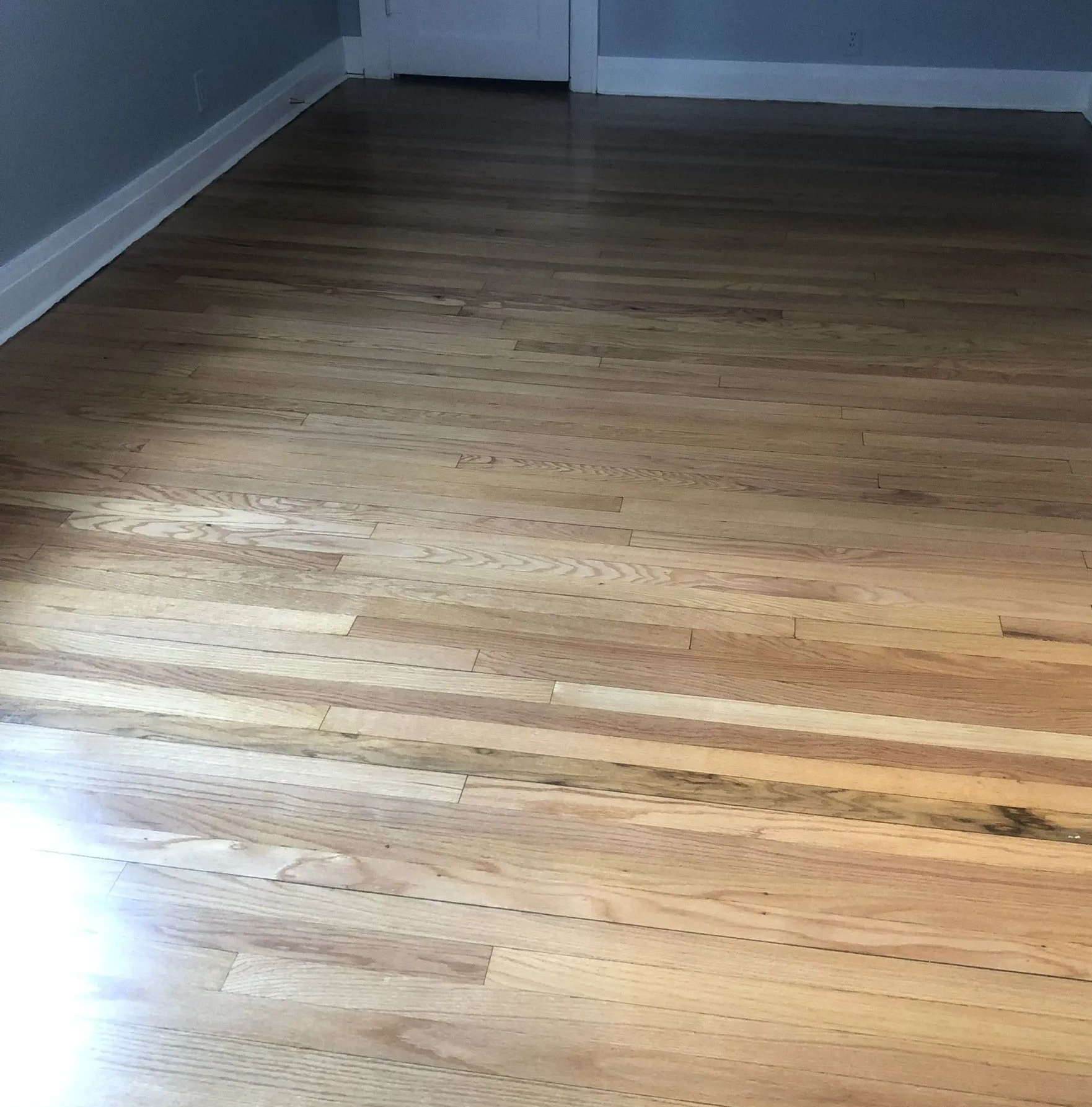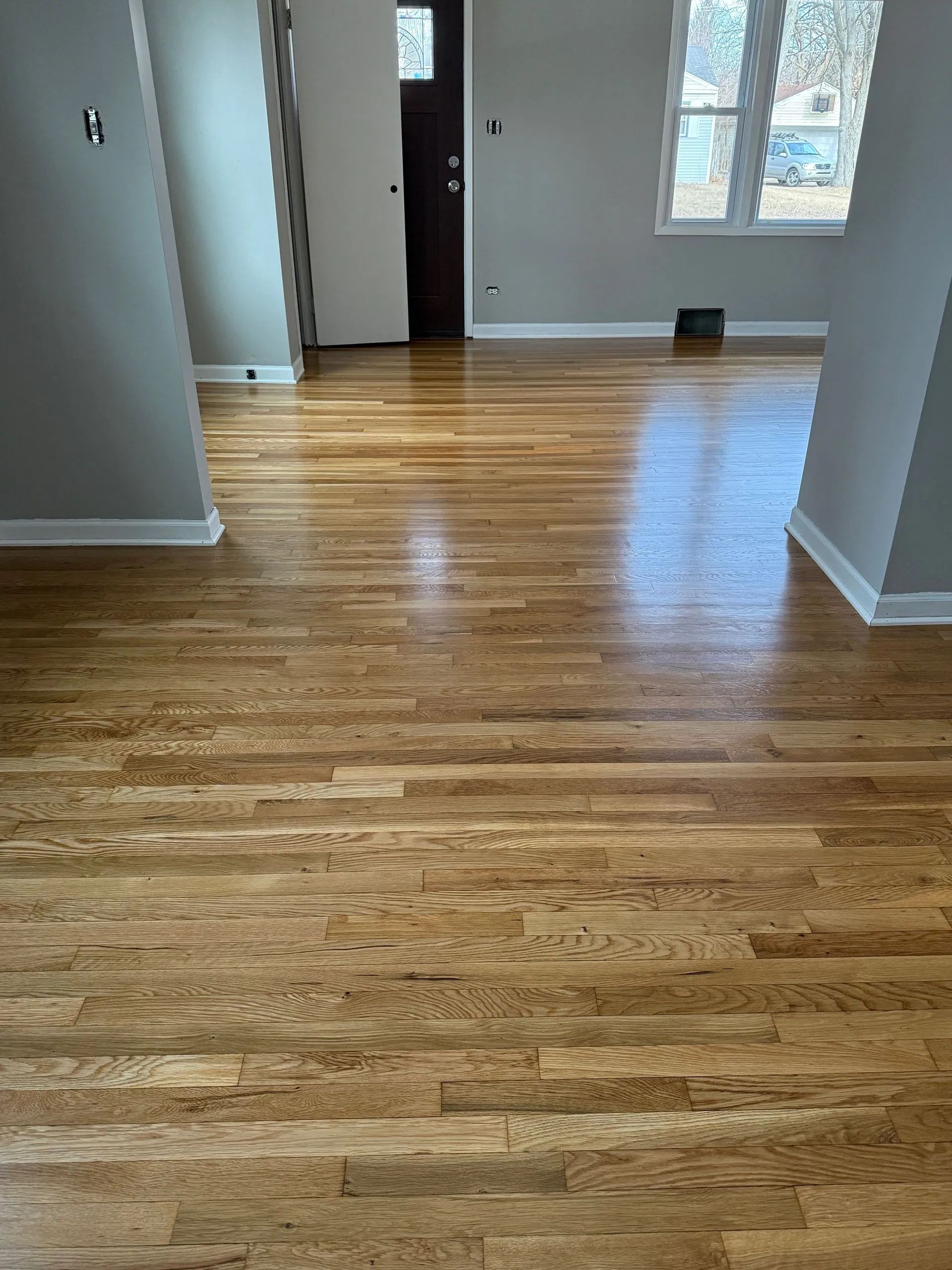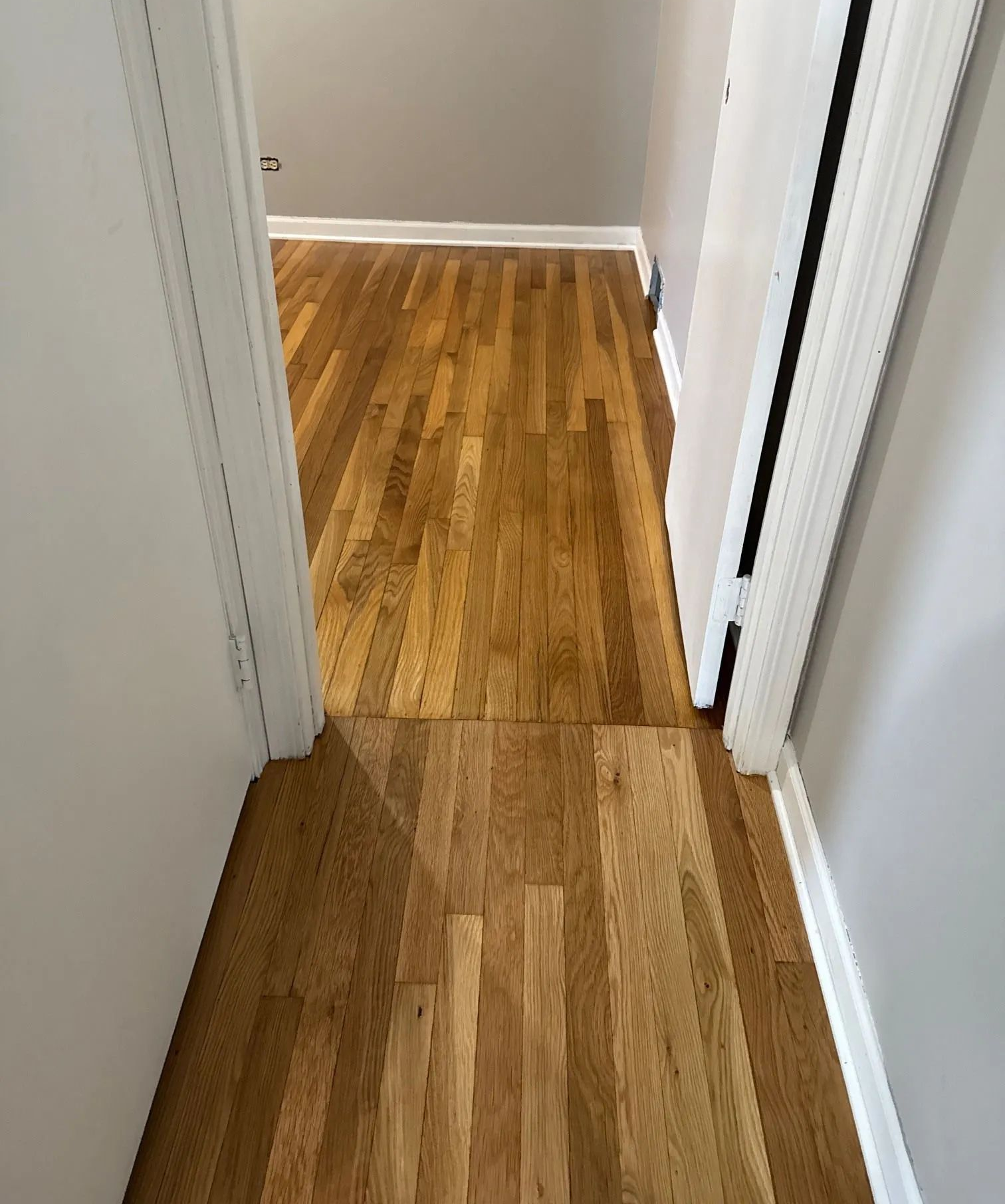
Screen and Recoat vs Full Refinish: Which Does Your Floor Need?
Quick Answer: A screen and recoat lightly abrades the existing finish and adds a fresh topcoat, so it works only when the finish is still firmly bonded, the wood has not been worn bare, and nothing like wax or polish is blocking adhesion. A full refinish sands the floor down to bare wood and rebuilds the finish from scratch, which is the right call for worn through traffic lanes, deep scratches, stains in the wood, or a finish that is peeling. A quick look at the wear pattern and a small adhesion test will tell you which one your floor actually needs.
Your hardwood is not ruined, but it has stopped looking the way it did. The shine is flat in front of the sink and along the path from the kitchen to the back door. There are fine scuffs everywhere the chairs slide, and a few light scratches where the dog turns the corner. A friend told you a quick buff and coat will bring it right back. A neighbor told you the only honest fix is sanding everything down. You are standing in the middle of the room wondering who is right.
Both of them can be right, depending on what is going on with your particular floor. Screening and recoating is a genuine, legitimate service that does a great job in the right conditions. It is also a service that fails quietly when it is used on the wrong floor, and the failure often shows up weeks later as peeling patches. This guide walks through how the two approaches differ, what to look for on your own floor, and how a professional decides before any machine is turned on.
What a Screen and Recoat Actually Does
A screen and recoat, sometimes called a buff and coat, is a surface treatment. The floor is cleaned thoroughly, then the existing finish is lightly abraded with a fine screen or pad on a buffing machine. That scuffing step is not meant to remove the finish. It is meant to dull the old surface and give it microscopic texture so a new coat can grab on. After the dust is removed, a fresh coat of finish is applied over the top.
What you get from this is a renewed surface layer. Minor scuffs and hairline scratches that live only in the finish tend to fade or disappear, and the sheen comes back evenly. The floor also gets a new protective layer, which slows down future wear on the wood beneath it.
What you do not get is a change to the wood itself. A screen and recoat does not remove dents, does not lighten stains that have soaked into the boards, does not flatten boards that have cupped, and does not repair anything that has already worn through the finish. Think of it as refreshing the coat of protection, not restoring the surface underneath.
What a Full Refinish Does Differently
A full refinish goes all the way. The old finish is sanded off, usually with a drum sander across the main field and an edger or orbital sander along the walls and corners, until the floor is bare wood. Scratches, gouges, graying, and surface level stains are sanded out as far as the board thickness allows. From there the floor can be stained a new color or kept natural, sealed, and finished with multiple coats.
Because the process starts from bare wood, it can solve problems a recoat cannot. It evens out worn traffic lanes, removes deep marks that go beyond the finish, lets you change the color of the floor, and creates a brand new finish system with no old layers or contaminants underneath. It is also a bigger project with more disruption in the house, which is why it should be chosen when it is truly needed rather than as a default.
Start With the Question That Decides Everything
Before comparing the two methods, there is one question that sorts most floors into the right category: is there still finish on the wood everywhere?
A recoat bonds to existing finish. If finish is gone in places, the new coat is going onto bare or semi bare wood in those spots and onto old finish everywhere else. The two surfaces absorb and look different, and the repaired areas often show up as patches of different sheen or color. For this reason, wear through is one of the strongest signs that a full refinish is the better path.
You can check this yourself in good light. Look at the busiest areas, such as the entry, the kitchen, the doorways, and the spots in front of the sofa. If the finish looks glossy or satin with scratches on top of it, it is still there. If the wood looks gray, dry, or darker where dirt has worked into the grain, or if a drop of water soaks in instead of beading up, the finish has been breached.
Tip: Shine a flashlight across the floor at a low angle, parallel to the boards. Worn areas look flat and dull, while areas with intact finish reflect light evenly. This makes wear through patterns easy to spot even when the floor looks fine from standing height.
Signs a Screen and Recoat Is a Good Fit
A recoat tends to work well when the following are true across the whole floor:
The Finish Is Firmly Bonded
It is not chipping, flaking, or peeling at the edges of boards or in high traffic spots.
The Damage Lives In The Finish
Light scuffs, fine scratches, and a general dullness that reappears even after cleaning are all surface level issues.
There Is No Bare Wood
No gray patches, no dark dirty grain, and no spots that soak up water.
The Floor Has Been Cleaned And Maintained With Appropriate Products
Floors that have only been cleaned with products meant for hardwood are far more likely to accept a new coat.
The Boards Are Flat And The Color Is Acceptable
Recoating does not change color in any meaningful way, so if you are happy with the tone of the floor, this is a plus.
If your floor ticks all of these boxes, a screen and recoat is a smart way to renew it without taking the wood down to bare fiber. It is also a service that can be repeated at sensible intervals, which helps keep the original finish from ever wearing through in the first place.
Signs You Need a Full Refinish
A recoat will not improve the following problems, and in some cases it makes them more obvious by adding a fresh sheen over them:
Worn through traffic lanes. Bare wood in the walkway, graying, or dirt that will not come out of the grain.
Deep scratches and gouges. If you can catch a fingernail in the scratch, it has gone past the finish. A new coat will not fill it.
Stains in the wood. Pet stains, water marks, and dark spots from plants or leaks are in the board, not on the finish.
Peeling or flaking finish. If the existing coating is letting go, a new layer on top of it will let go too.
Sun fading or a color you want to change. The finish sits on top of the color. Changing the look of the wood requires going down to the wood.
An old finish that is failing across many boards. Patchy yellowing, cloudy areas, or widespread cracking all point to a finish that has reached the end of its life.
If you recognize several of these, the more honest answer is a full refinish. It is not a worse option, it is simply the one that addresses what is actually wrong.
The Hidden Dealbreaker: Wax and Polish
Even a floor with a perfectly intact finish can be the wrong candidate for a recoat because of what has been put on top of it over the years. Wax, oil soaps, and acrylic polishes that promise shine can leave a film on the surface that is invisible to the eye and fatal to adhesion. A new coat applied over it can bead up, fisheye, or peel off in sheets.
Professionals test for this before anything else. A common check for wax is to rub a bit of mineral spirits on a white rag. If the rag picks up a yellow or brown tint, there may be paste wax. Water drops that leave white spots after about ten minutes can point to wax as well. For acrylic polish, a few drops of a polish stripper or ammonia left for a couple of minutes can turn milky if polish is present.
If wax or polish is found, the plan usually changes. Light cleaning may not be enough, and sanding a waxed floor is not simple either, because wax can sit down in seams and soft grain and cause adhesion trouble even after sanding. This is exactly the sort of detail that makes a short inspection by an experienced flooring pro worth having before you commit to either method.
The Adhesion Test That Removes the Guesswork
Because contamination and old finishes are not always visible, a good contractor does not rely on guesswork. A small test area is cleaned, abraded, and coated using the same steps planned for the full floor. After the finish has cured, the area is checked with a cross cut test: two light cuts through the finish forming an X, a piece of tape pressed over the cuts, and a quick pull. If the finish stays put, adhesion is good. If flakes lift with the tape, the floor is telling you that a recoat will not hold.
The test should be done in a spot that represents the real conditions of the floor, such as near the kitchen or the dining table, rather than in a closet that never saw a mop or a cleaning spray. It does leave a small mark, so it is worth agreeing on where it will be done. That small mark can save you from a whole floor of peeling finish.
Warning: Do not apply a store bought polish or a quick topcoat yourself to see if it helps. Many of these products leave a film that blocks adhesion for any later professional coating, and a floor that could have been a simple recoat can end up needing a full sanding.
Why Chicago Area Homes Make This Decision Trickier
In Des Plaines and the surrounding suburbs, the seasons put a lot of stress on a finish. In summer, humid air makes boards swell slightly, and in winter, the heating system dries the air and the boards shrink. Finish has to flex with that movement. Over the years, tiny cracks can form at the edges of boards, especially along joints where the finish bridges two planks.
Those micro cracks collect dirt and moisture, and they are one of the places a finish begins to fail. During an inspection, it is worth looking closely at board edges and at the joints, because a floor can look smooth from above while the finish at the seams is already breaking down. A recoat will not seal a failing finish at the seams. If cracks run along many boards, that points toward a full refinish.
Winter also brings salt and grit tracked in from outside, which acts like sandpaper across entryways and mudrooms. That is why wear through so often starts near the doors and spreads inward. A recoat done on a schedule, before the finish has been breached, is far more effective than one done after the wood is already exposed.
The Order of Work for Each Approach
Knowing what happens on each job helps you understand why the decision matters.
For a screen and recoat: the floor is inspected and tested, then cleaned thoroughly. The surface is abraded evenly with the grain, the edges are handled by hand, and the dust is removed completely. A coat of compatible finish is applied and left to cure before the room goes back into use. The job is generally shorter than a full refinish, and the furniture is usually back in place sooner.
For a full refinish: the room is cleared and the floor is cleaned. The old finish is sanded off in stages, the edges and corners are sanded separately, and any needed repairs are made. Stain is applied if you want a color change, followed by a sealer and multiple coats of finish. Each step needs time to dry and cure properly before the next, which is why a full refinish takes longer.
Neither approach should be rushed. The quality of the final surface depends heavily on clean preparation and patience between coats.
How to Decide in Ten Minutes
If you want a quick way to sort your own floor before calling anyone, walk through this short list.
Look for bare or gray wood. If it is present anywhere, lean toward a full refinish.
Run a fingernail across a few scratches. If it catches, they are deep.
Check for peeling or flaking. Any sign of the finish letting go points to a full refinish.
Think about the history. Has the floor ever been waxed, polished, or treated with a shine product? If yes, mention it up front.
Check the sheen across the room. Even sheen with surface scuffs suggests a recoat. Large dull patches suggest deeper wear.
Decide whether you want a different color. If so, a full refinish is the only route.
Whatever you find, have a professional confirm it with a proper inspection and a test patch. A floor can look like an easy recoat and fail the adhesion test, or look worn and turn out to be a clean candidate.
Frequently Asked Questions
Can a screen and recoat remove scratches from hardwood?
It can reduce light scratches that are only in the finish. Scratches that have cut into the wood will still be visible, and a fresh coat may even make them stand out more.
How do I know if my floor has wax or polish on it?
Professionals use simple checks such as a mineral spirits rag test or a drop test. Because these products are invisible once dry, it is best to have the floor tested before any coating is applied.
Does screening damage the existing finish?
No. The abrading step is light and is meant only to scuff the surface so a new coat can bond. It is done evenly and with the grain so it does not leave visible marks.
How often can a floor be recoated?
When the finish is maintained and the wood has not been worn bare, a recoat can be repeated several times over the life of the floor. Each one depends on the finish still being sound and free of contamination.
Can I change the stain color with a recoat?
No. A recoat sits on top of the existing finish and does not alter the color of the wood. A color change requires sanding to bare wood and applying new stain.
Will a recoat fix floorboards that have cupped or gapped?
No. A recoat addresses the finish only. Cupping, gapping, and loose boards are issues with the wood or the subfloor and need to be handled separately, often by finding and correcting the moisture source first.
Match The Work To The Wood Below
A screen and recoat and a full refinish are not competing options so much as answers to different questions. One renews a finish that is still doing its job, while the other rebuilds a floor whose finish has given up. When the choice rests on what is actually on the boards, backed by a small test patch, you end up with a surface that lasts rather than one that peels within weeks, and you avoid paying for the project twice.
Ada Hardwood Flooring Inc.
has spent several
years reading floors across Des Plaines, IL, where humid summers and dry heated winters work on every finish and seam. Checking the wear pattern, the board edges, and any hidden wax before a machine is turned on is what separates a recoat that holds from one that lifts off in sheets. Settling that question early keeps a dull floor from becoming a failed one, and keeps the finish you choose doing its job for years.