How to Tell If Your Hardwood Floors Need Repair (and When to Replace Instead)
Quick Answer: Most hardwood floor problems are repairable rather than a reason to replace the whole floor. Surface scratches, dents, worn finish, minor gaps, and a few damaged boards can usually be fixed with sanding, refinishing, or board replacement. Replacement becomes the better option when the wear layer is too thin to sand again, when water has reached the subfloor, or when more than about a third of the boards are damaged. A solid 3/4-inch hardwood floor can typically be sanded and refinished four to ten times over its life, so age alone rarely rules out repair.
A cold January in Des Plaines does something predictable to hardwood floors. As the furnace runs and indoor air dries out, boards give up moisture and shrink, and thin gaps open up between them. Come summer, the humidity climbs, the wood swells, and those gaps close again. Most of that movement is normal and reverses on its own. Some of it does not, and that is where the question starts: is this a repair, or is the floor telling you it needs to be replaced?
The answer usually leans toward repair. Hardwood is one of the few floor surfaces built to be fixed in place instead of torn out. Knowing which problems are cosmetic, which are structural, and which sit on the line between the two helps you spend money in the right place.
The Most Common Hardwood Floor Problems and What Causes Them
Before you can decide on a fix, it helps to name what you are actually looking at.
Scratches And Dents
Furniture legs, pet claws, grit tracked in on shoes, and dropped objects leave the marks most homeowners notice first. Light scratches sit in the finish only. Deeper gouges reach the wood itself. The distinction matters because finish-level damage often buffs out without touching the wood, while gouges call for filling or board work.
Worn Or Dull Finish
Every hardwood floor wears from the top down. Traffic lanes near doorways and in hallways lose their sheen first, then start to look gray or cloudy as the protective coating thins. This is wear on the finish, not the wood, and it is one of the easiest problems to correct.
Gaps Between Boards
Seasonal gaps that appear in winter and close in summer are normal and rarely need attention. Gaps that stay open year-round, or that grow steadily, point to a moisture imbalance or boards that were installed at the wrong moisture content. The National Wood Flooring Association recommends keeping indoor relative humidity between 30 and 50 percent to limit this kind of movement.
Cupping And Crowning
Cupping is when the edges of a board rise higher than its center, giving the floor a washboard feel underfoot. Crowning is the reverse, with the center higher than the edges. Both come from uneven moisture, often more moisture below the boards than above. A plumbing leak, a damp crawl space, or a wet basement slab is a frequent cause.
Buckling
When boards lift away from the subfloor entirely, that is buckling, and it almost always means significant water exposure. Buckling is the most serious of the moisture problems and the one most likely to involve board replacement rather than surface work.
Water Stains And Dark Spots
Standing water, pet accidents, and overwatered plant pots leave dark discoloration as moisture penetrates the finish and reaches the wood. Caught early, these can sometimes be sanded out. Left long enough, the stain reaches deep into the grain and the affected boards need to come out.
Loose Or Squeaky Boards
Squeaks usually come from boards rubbing against each other or against loose fasteners as the subfloor flexes. This is often a fastening problem rather than a wood problem, and it is fixable without replacing anything.
Repair or Replace? How to Actually Decide
Once you know what you are dealing with, three questions settle most cases.
How much wood is left to work with?
A repair pro checks the thickness of the wear layer, meaning the wood above the tongue-and-groove joint. A standard 3/4-inch solid hardwood floor has enough material to be sanded and refinished roughly four to ten times across its lifespan, with each pass removing about 1/32 of an inch. If a floor has already been refinished several times and the wear layer is running thin, sanding again risks exposing the fasteners, and replacement becomes the safer call. Engineered floors have a much thinner top veneer and can usually take only one or two refinishings, which changes the math.
How widespread is the damage?
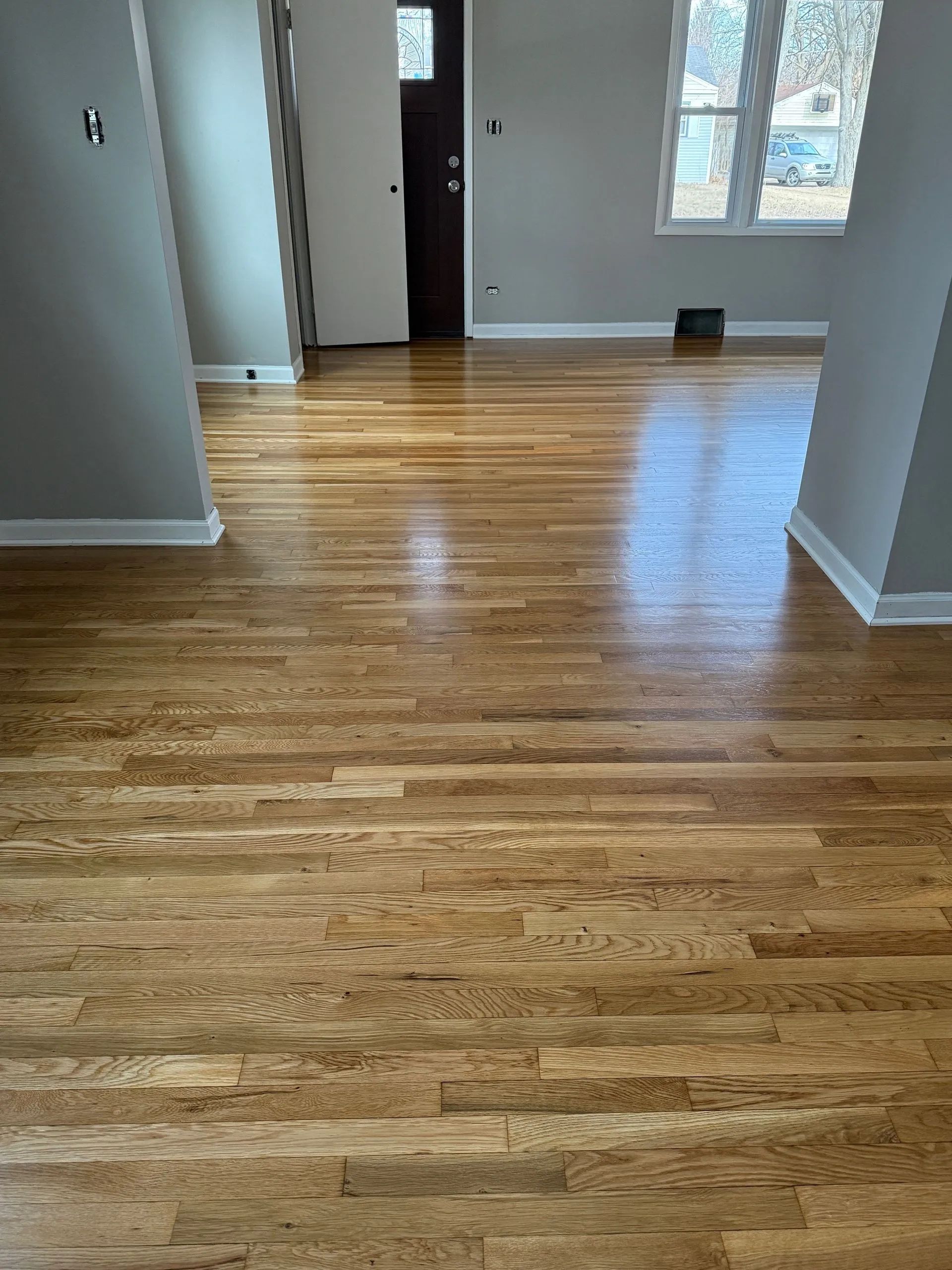
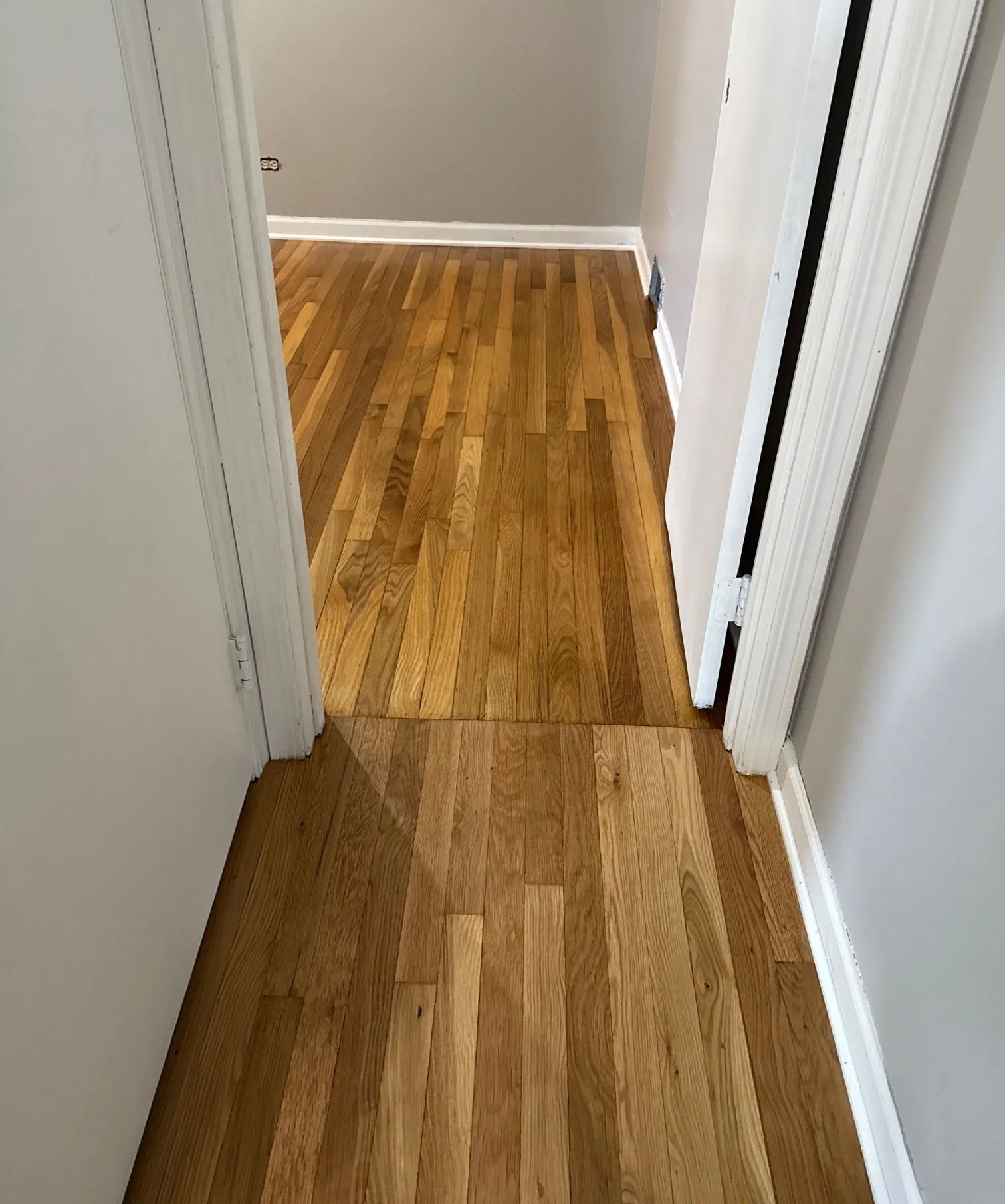
A handful of damaged boards in an otherwise sound floor is a repair, and a good one. Individual boards can be lifted out and replaced with matching wood, then the whole area sanded and refinished so the patch blends in. When damage is scattered across a large share of the floor, or the subfloor beneath has failed, the cost and effort of piecemeal repair start to approach the cost of a new floor.
Did the water reach the subfloor?
Surface moisture is often recoverable. Water that has soaked through to the subfloor is a different situation, because a wet subfloor can harbor mold and will keep feeding moisture back into any new wood placed on top of it. In those cases the subfloor has to be dried or replaced first, and that assessment should happen before anyone commits to a repair-only plan.
Tip: Keep a few spare boards from your original installation, or note the exact species, width, and finish. Matching old wood to new is the hardest part of board replacement, and having the specifics on hand makes a patch far less noticeable.
How Professional Hardwood Floor Repair Works
A repair visit follows a fairly consistent path. It starts with an assessment: the pro identifies the cause, checks moisture levels in the wood and subfloor with a meter, and measures the wear layer to confirm the floor can still be sanded.
From there, the work depends on the problem. Board replacement removes the damaged pieces and fits new boards that match the existing species and width. Sanding and refinishing takes the floor back to bare wood, removes surface scratches, stains, and worn finish, and applies fresh stain and sealer. Spot repairs handle isolated scratches, dents, or small water marks without redoing the entire room. Moisture correction addresses the source, whether that is a leak, a humidity problem, or a drainage issue, so the same damage does not return.
The order matters. Fixing the wood without fixing the cause of the damage tends to buy a short reprieve, not a lasting result. A reputable repair company treats the underlying moisture or fastening issue as part of the job, not an afterthought.
Preventing the Damage That Leads to Repairs
Most hardwood repairs trace back to a small number of avoidable causes, and a few habits go a long way.
Hold indoor humidity in the 30 to 50 percent range that flooring standards recommend, using a humidifier in winter and air conditioning or a dehumidifier in humid months. Put felt pads under furniture legs and replace them as they wear. Use rugs or runners in doorways and high-traffic lanes to catch grit before it grinds into the finish. Wipe up spills quickly rather than letting water sit. Sweep or vacuum regularly, since the sand and grit tracked in from outside act like sandpaper underfoot. None of these steps are dramatic, but together they push the next repair years further out.
Frequently Asked Questions
Can you repair just one section of a hardwood floor, or does the whole floor need refinishing?
You can repair a single section. Individual boards can be replaced and the surrounding area sanded and refinished to blend the patch. Blending an isolated repair into an older floor is harder than doing a full room, though, because the existing finish has aged and the wood may have changed color, so ask your repair pro how visible the transition is likely to be.
How do I know if my hardwood floor can still be sanded?
The deciding factor is the thickness of the wear layer above the tongue-and-groove joint. A pro measures this in a few spots. A 3/4-inch solid floor generally has room for four to ten sandings over its life, but a floor that has already been refinished several times may have too little wood left. Sanding a floor that is too thin can expose the fasteners, so this is a measurement worth confirming before any work starts.
Is cupping in a hardwood floor permanent?
Not always. If the excess moisture is removed and the floor is allowed to dry slowly and fully, mild cupping can flatten back out on its own over weeks or months. Sanding a cupped floor before it has finished drying can lock the distortion in place, so the drying comes first. Severe cupping, or cupping caused by ongoing water intrusion, is more likely to need board replacement.
How much does hardwood floor repair cost compared to replacement?
Costs vary widely with the size of the area, the type of damage, and local labor rates, so a fair answer requires an in-person estimate. As a general rule, repairing sound wood is meaningfully cheaper than tearing out and replacing a floor, which is a large part of why hardwood is valued as a long-term surface. Replacement tends to win only when the wear layer is spent or the damage is extensive.
Can water-damaged hardwood floors be saved?
Often, yes, if the water is caught early and has not reached the subfloor. Surface stains can sometimes be sanded out, and individual swollen or stained boards can be replaced. When water has soaked through to the subfloor, the subfloor has to be dried or replaced first to prevent mold and recurring damage, which is why a moisture assessment comes before any repair plan.
Why Repair Usually Wins With Hardwood Floors
The takeaway is worth holding onto: a damaged hardwood floor is usually a project for a repair pro, not a demolition crew. Most scratches, worn finishes, and even a handful of ruined boards come back to life with sanding, refinishing, or a careful patch. Reaching for replacement too early throws away sound wood that still has good years left in it, along with the warmth and character that only a floor lived on for a long time can truly develop.
Timing decides the rest. The same damage caught early usually stays small and affordable, while a problem left alone spreads into the subfloor and forces the harder, costlier choice. Homeowners who learn to read the early warning signs hold onto more of their original wood and spend far less getting there. Backed by over several
years of
repairing floors
throughout Aurora, CO, the crew at Ada Hardwood Flooring Inc.
has watched a timely fix quietly save floors that seemed beyond help.